Firstly, I’m sorry for the emotions, my childhood turning point evokes. The pic is an example of mine. I wasn’t going to include it, but I feel like it gives a good visceral example of deep messages in movies (of course actual philosophy, and non emotionally devastating examples apply, too). I just watched a clip on a study on some elderly men, taken to a time warp hotel, and asked to pretend it was that time, and it had huge positive effects on their physical capabilities and mental capacity. And it reminded me of the power of hope, it’s not just embedded in the happy ending, where everything works out ok. Or the promise of it. Hope is also the core of resilience, necessary for driving each step that carries you along the yellow brick road.
I’ll share mine here, so you get an idea what I’m asking. I was devastated watching the scene above, as a kid. But also, I saw Atreus ability to keep going, not only not giving up, and therefore not sinking in a place that takes you if you do, but then also carrying the weight of the grief of his life companion. And he was now alone, realising his mortality and facing, what he is told, are impossible odds. He still keeps going. I think, to child me, there was so much power in seeing something is possible. I believed I, too, could survive anything. And even if I were alone, I could still survive anything, because that power came from inside me, no one can take that from you. “Don’t let the darkness take you” the darkness is an external force. It wants to creep in and convince you to buy it’s snake oils.
There is so much power in convincing people the “darkness” is inevitable, there is nothing else. I see it all around me, embedded in the propaganda, convincing us not to resist, that resistance is futile. Half of the battle is in our own heads, and the brainwashing swamps we wade through, now.
What are your tools of resilience, your keys for undoing the fight or flight, all the horrifying videos around us are designed, to evoke, to keep our thinking brains detached, and only our “run hide” brains active, so we can’t think, so we can’t plan, so we just sink in and accept?
What’s helped you get back up, when you have fallen? From whatever sources, I just feel like, maybe now is a time, it’s important to share a shoulder to cope on. Or even just moved you, to an extent it changed your perspective or way of thinking?
“People shouldn’t be afraid of their governments. Governments should be afraid of their people.” -V for Vendetta
I used to think about governments in terms of the things I had to do for them (pay taxes, jury duty, carry my license while driving) or else what they’d do to me (fines or jail, usually). This quote helped me understand that this transaction is not one-way and that if a government fails its people then the people should hold it accountable.
Whether that’s healthy for a given person, realistically possible, or if there’s enough people who’ve been wronged to hold it accountable are different questions, of course.
Watching how a single person, a single life, could positively impact the lives of so many people got me to be a registered organ donor.
Nowhere in your post do you state the name of the movie. What film is this from?
The NeverEnding Story. Bring tissues. https://youtu.be/Xwmn2pdr78M
The critique of fascism that is the Enclave, specifically in Fallout 2. As much as they are my favorite bad guy faction that is partially because of how well the critique works. They have the cool weapons, they have the style, and the have an awesome front man in the form of Frank Horrigan, but when it comes down to it they’re a bunch of weirdos hiding on an old oil rig clinging to ancient symbols while planning on commiting omnicide so they don’t have to actually work for anything.
Similarly the NCR is a great critique of liberalism in New Vegas, falling into the same pitfalls as the old world but with the potential to improve. For new world hope to bloom wherein the Enclave hold onto old world blues.
Or maybe I’m looking too far into the funny power armor and super mutant post apocalyptic games. Though I don’t think I am because the Interplay alumni are all philosophy and history eating crackheads and I see through them!
Man you’re making me want to replay New Vegas but I’m not sure I have that sort of time commitment right now. But it is so good tho…
You Got the Touch scene from Transformers (1984) taught me about what it means to be a leader and to sacrifice for your ideals. Optimus Prime was my hero.
There have been many since I started paying attention. Books, movies, whatever. Some were just well placed for the moment in the story and temporary, some were better philosophically absorbed. Wish I could pick something specific, but none come to mind. My favorites revolve around succinct and illuminating commentary on or demonstration of human nature and personal understanding. Bad or good.
I should start saving some of these in notes. Doesn’t do me much good not remembering.
CoCo fundamentally changed the way I think about death and the value of memory. I went into it knowing almost nothing about Día de los Muertos, so I wasn’t expecting it to affect me as deeply as it did.
The idea that someone can disappear forever only when they are no longer remembered hit me in a way I wasn’t prepared for. It was such a sad thought, but strangely comforting too. Sad because it means there is a kind of “second loss” that can come with time, but comforting because it suggests that the people we love are never truly gone as long as we carry them with us, speak their names, and keep their stories alive.
That idea stayed with me long after the movie ended. It made death feel less like a hard ending and more like a responsibility of love through memory.
Plus, the music is amazing.
That movie was recommended to me by several Mexicans when I was in Mexico a few days before the holiday. It seems they did an excellent job representing the meaning and the spirit of the celebration. So the cool thing is you do, now, know Dios de Los Meurtos.
Beautiful movie.
Plus it introduced me to the song La Llarona (covered by many people) for a haunting October sound
South Park S3E10, Korn’s Groovy Pirate Ghost Mystery.
The whole episode is a Scooby-Doo parody, and it’s alright. But the joke that got me thinking was this:
Jonathan Davis: All right gang, we have to split up and look for clues!
Stan Marsh: How should we split up?
Jonathan Davis: I know! Let’s have everyone who enjoys having obstacles in their life which they can overcome go this way, and everyone whose insecurity sabotage their potential to overcome those obstacles go that way.
[Everyone says “OK!”, then splits up into two roughly equal groups]
Kyle Broflovski: Wow! That was easy!
They just all knew which group they were in immediately. Got me thinking about which group I was in.
That Japanese one from the Ghibli movies.
Edit: the ideology i mean.
So whimsical!
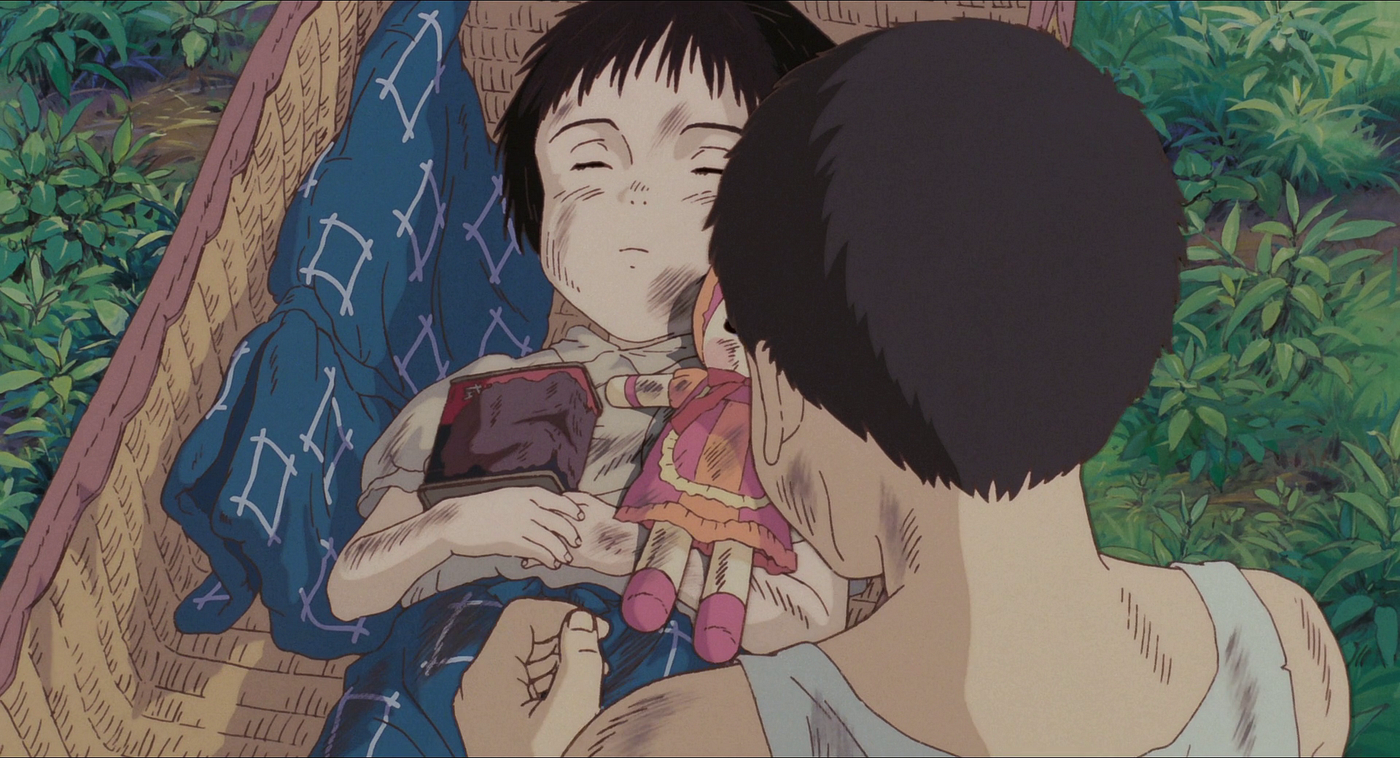
The Kara No Kyoukai anthology influenced my imagination and how I view my inner world of art.
The perfect blend between minimalist, simple yet elegant design that is set in an urban setting.
Two come to mjnd:
Star Trek 2 - The Wrath of Khan.
Spock gives his life to save his friends, willingly and without pause. And his best friend has to say goodbye to him.
Of course, the first time I saw it I didn’t know what was coming next, so to me it was final, and devastating.
It prepared me well for things that happened IRL later on.
Secondly, because I don’t want to be 100% on a downer, the finale of Labyrinth. “You have no power over me” nudged me towards the idea that many people who profess to be in charge of you only have that power because they say they do. And you can take that back for yourself.
The Matrix really made me understand where Descartes was coming from. When we say something is “real” it’s always subjective and cannot be objective. That’s an incredibly difficult concept for most humans to truly grasp.
It’s a great connection. Beyond Descartes, the Wachowskis explicitly cited Buddhist philosophy as a primary influence, specifically the concepts of Maya (illusion) and Samsara (the cycle of suffering which people unfortunately tend to misunderstand a lot).
The “There is no spoon” scene is a direct nod to Sunyata, or emptiness. It suggests that “reality” isn’t just subjective; it lacks inherent existence. In this view, it’s not just the world that is a construct, but the “self” perceiving it as well. Lana Wachowski has also stated that the trilogy was designed as a “meditation” on the nature of choice and the self, influenced by their interest in Eastern philosophy.
There’s also an Upanishadic mantra in the third movie soundtrack, appropriately:
Asato mā sad gamaya (from the unreal, lead me to the real)
Tamaso mā jyotir gamaya (from darkness, lead me to the light)
Mṛtyor mā’mṛtaṃ gamaya (from death, lead me to immortality)
Unpacked here (a bit, but it’ll correct the likely, immediate misconceptions people unfamiliar with eastern philosophy would get)
It also touched on the systemic oppression of the modern world, and showed how most people just go along with it … I was a young adult when it came out and that really shook up my word view.
We learned that in school, movies like that taught me that it was a difficult concept for humans to grasp.
Billie Eislish did say it more succinctly though, damn.
Wut?
Literally just a line in one of her songs, nothing deeper.
It’s about grief and depression. Oh and having a shitty dad. The depression part hit too hard when I was a kid and didn’t understand how bad my depression was.
The X-Files episode, “Beyond the Sea” made me anti-death penalty. Brad Dourif plays a mass murderer on death row who claims to have visions that could save two missing girls. The show doesn’t go for the easy out - he’s guilty of horrible things and he’s trying to cut a deal. Scully’s skepticism and faith collide - she thinks he’s playing a cruel game, but if she doesn’t go along, he will be put to death, which is against her Catholic beliefs. One of Gillian Anderson’s best (and favorite) episodes.
The end result is a surprisingly profound meditation on the value of life, the difference between justice and revenge, and the depravity 9f state-sanctioned murder.
Honestly, a lot of the Scully-focused episodes are great.
The Groundhog Day taught be a lot about acceptance and trying to make the best of whatever situation I’m in.