• 1 Post
  • 83 Comments
Joined 20 days ago
cake
Cake day: September 19th, 2026

help-circle

  • If I ever invent a time machine, I’m making a few pit stops on my way back in time to cap Hitler, and Milton Friedman and his friends are on the list. He’s the misanthrope who popularized the idea that the only duty of a company’s leadership is to deliver profit, and any other pursuit is a disservice to the shareholders. This is known as the Friedman Doctrine.

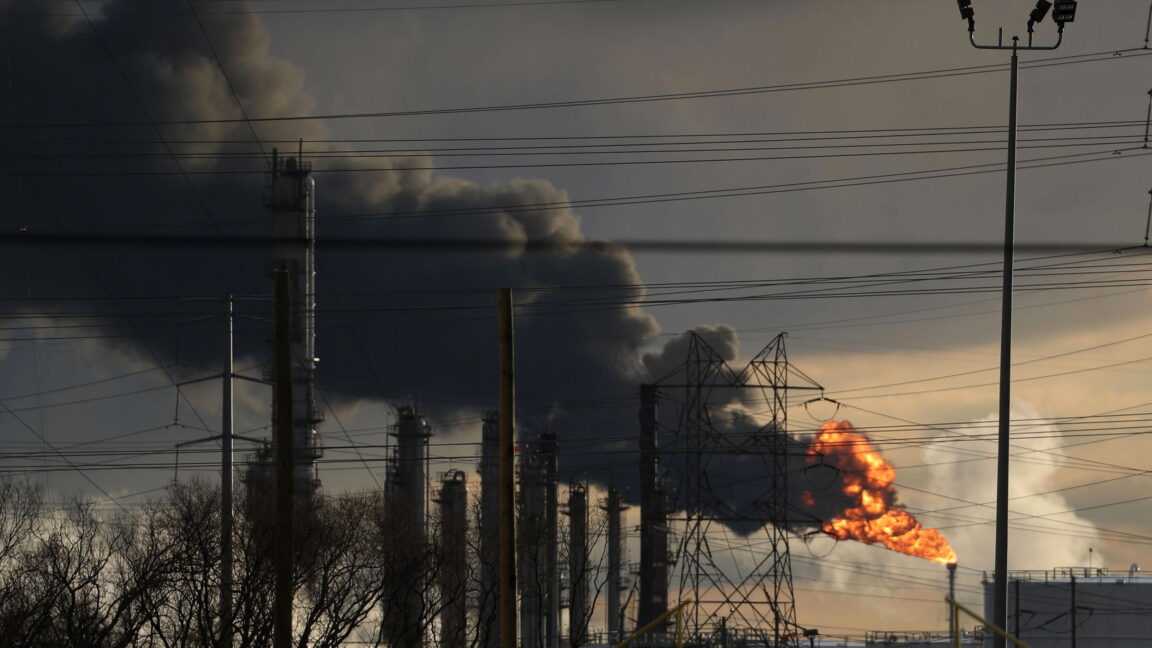


  • They used another tactic that I didn’t notice until one of the commenters on the Ars article/forum pointed it out:

    Promising good stuff that’s not too close (~5 years) so you’ll remember it and say, “Hey, where’s my <good thing>?!” but not so far away (~25+ years) that you’ll say “That’s way too far you need to fix this shit now.” Apparently it was used in Soviet Bloc countries a lot to keep the population from revolting, and now I’m seeing it everywhere in our society. In this case, the O&G companies said things like, “Sure! We’ll be generating all your fuel with algae in ~15 years and then we’ll never need to drill again!” and “We’re developing amazing carbon capture technology that’s a mere ~15 years away and will repair all the damage we’re not doing!”

    Ars Technica might be owned by Conde Nast, but it has a really smart userbase on average, so I tolerate that fact.


  • I think it’s a little of both, but one of my friends left my company producing weird semiconductors to go work at Micron making RAM. They’re definitely ramping up a little, but the equipment and techniques to fab those chips is very specialized. Imagine trying to drill zillions of really tiny, deep pits, and then making sure the very bottom of those pits get coated while the sidewalls are completely unaffected… and you have to do it everywhere uniformly on a hundred 350mm wafers per minute.


  • There’s a pretty big benefit to the solar panels: more efficient and also can be placed in a solar-synchronous orbit that is always illuminated. I can’t imagine that power advantage outweighs the disadvantages of cooling power-hungry hardware with no way to reject that heat to air or water. I’m with you: WTF are they thinking?

    I heard Google just launched a test bed. Basically one mini server the size of a refrigerator that can only operate for 15 minutes before it needs to shut off to prevent heat damage. I’m guessing that thing will prove the case against celestial data centers, but we’ll see. The only good thing to come of this is that it might help advance cooling tech for satellites and suchlike.


  • Depending on your definition of “real,” they’re probably correct. It was real cheese, before it was dehydrated, powdered, and mixed with an emulsifier (probably sodium citrate) so it would reconstitute itself into a cheese sauce. I’ve become a little more sympathetic to this sort of thing since I bought of pouch a sodium citrate off the interwebs and started emulsifying things I didn’t think could be emulsified, like an entire wheel of brie.