

28·
6 days agoThis is greatly infuriating, actually.
This is greatly infuriating, actually.
Mobile gaming chair
In the version I have (on my Samsung A37) I can exempt certain apps from power management. So that’s nice.
I still have some complaints about it, but that particular issue has an answer at least.

I was five.
https://www.firstinspires.org/programs/fll/
It’s the entry level competition from the same people who make the competition with those 2m tall robots.
I participated in their mid level one (18 inch / half meter cube size, metal parts) when I was in high school.
The moral of the story is: Watch PornHub videos instead of YouTube videos to do your part to support content creators.

Cry

The thing about that is the main Democrat establishment hates that type of candidate and tolerates Republicans by comparison, so in such a race, the Democrat party actively sabotages the leftist candidates. That’s why Bernie runs as an independent - the Democrat party would not support him and actively sabotaged his attempt to run for president in 2016. The Democrat party also attempted to sabotage Mamdani’s run for mayor of NYC, but they were unable to stop him from winning anyways, despite their opposition. So, maybe the dam is starting to crack and we will see more cases like that. The party will fight it tooth and nail the whole way, though. They would much rather have Republicans in power than leftists.
They’re more afraid of leftists than they are of MAGA. They more or less threw the 2024 election on purpose rather than move an inch to the left, and then after losing, they figured they can just lie low and blame all the destruction on the Republicans, claiming that they were completely powerless.
All trans people secede from their various nations and invade TERF island to form a new nation flying the trans pride flag and honoring Blahaj as the national animal.

If I remember correctly, the controversy was not over changing her model, but in changing a victory pose that highlighted that part of her model. So they nerfed how much she showed off her butt, basically.

Let me explain the angle that I am coming at this from:
I am trans. I am not specifically non-binary, but I appreciate all types of trans and non-binary representation in media, and want to support it. I appreciate it because it shows that the creator is willing to stand up for my people, and because it helps to normalize our existence to the audience of the media. Both of those reasons depend on how explicit the representation is, because both depend on the average viewer of the media being aware of the character being trans and/or non-binary.
To me, this does not seem like explicit non-binary representation at all. Kit could be considered to be whatever gender the user wants, maybe even subconsciously. I don’t think Mozilla’s intention is for it to be subtle non-binary representation, either, I think that their intention is for users to be able to view Kit however they want - which would be a binary gender in most cases. They leave the door open for non-binary users to see Kit as non-binary too, which is better than being openly hostile, but in the current environment trans and non-binary people need actual allies to push back against the rampant hostility they face. So I don’t see this as a reason to specifically support Firefox. They’re just doing the bare minimum by not being openly hostile.
To contrast with that, take the mascot of Honkai: Star Rail, Pom-Pom. The developer, MiHoYo, is located in China, so they are legally barred from showing explicit LGBTQ+ representation. However, they go right up to that line and even arguably over it on many occasions, going basically as far as they can without saying it explicitly. Pom-Pom is no exception. All of the characters in the game refer to Pom-Pom with they/them pronouns specifically, including characters who know Pom-Pom very well. That goes far beyond what Mozilla did with Kit, because the implication that Pom-Pom is enby is quite clear and consistent. Mozilla never once used they/them pronouns to refer to Kit from what I have seen, and Mozilla could say outright that Kit is non-binary if they wanted to, so them not doing so is a choice.
Ah, I had not found that page from my research. That seems to explicitly represent the intention that Kit can be whatever gender people want Kit to be.
A correction to make from the research I did:
Mozilla did not say that Kit is non-binary or uses they/them pronouns. Nor did they use they/them pronouns for Kit in official material. They pointedly avoided using pronouns for Kit at all, to keep it ambiguous. It seems like their intention is for the user to see Kit as whatever gender they want Kit to be.
If the recreational use improves your mood, isn’t that a medical purpose too?
Is the line you draw based on the intent of the user or the intent of the provider?
Like, for instance, if someone with ADHD uses caffeine to help them focus better, is that medication? Or, if someone tries a hallucinogen with the intention of opening their mind, is that medication?
A couple more potential examples: Is a trans man using testosterone they purchased on the black market to treat their dysphoria medicating? Is an athlete using the same substance to enhance their performance medicating?


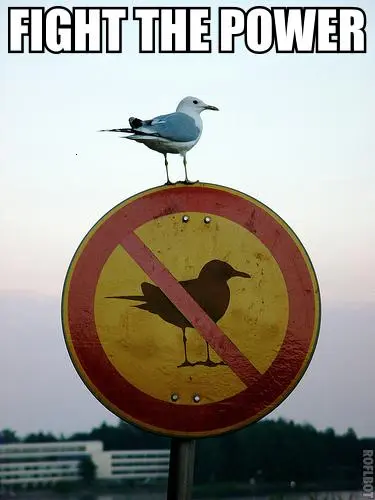

Honor among thieves.
You’re supposed to help them rip off others, not rip off them.