No the doctor says it costs this much, the hospital double it and says it costs this much, the insurance company says they will only pay this much
Doctors dont decide on costs of medications or procedures. Hospitals and Pharmacies do.
When a doctor prescribes you a medication, their software only show the MSRP as a guide (and sometimes if your insurance covers the type, depending on the software). Pharmacies, when they order medication, only get to see the suppliers price and supplier availiblity. – The price you pay is based on the Pharmacies markup from cost, usually around 23-40%, to cover operational costs and profit margins of around 3-17%.
The really messed up part is that Pharmacies in the US, are locked in by contracts to choose thier suppliers. This lets suppliers charge what ever they want to Pharmacies, and create artificial shortages at any time with impunity. Pharmacies can change suppliers after the contract is up, but, the supply system is so corrupt, its a case of bottom-up corruption. To fix it you would have to re-regulate the system from manufacturer to hospital. Allowing pharmacies to buy direct, prohibit supplier contracts/rebates, and regulating the costs of medications with caps at each stage would solve all of this. However, none of that can ever be done, as long as politicians have a option to make profit from the system too. They dont pay for medication or treatments, you do. They have no incentives to fix the system and every incentive to make it worse, which is why we see just that.
However, the biggest contributor to the cost from the medications manufacturers, They reap the most rewards. Want a example? Insulin. The cheapest medication in existence to produce, no licensing, extremely plentiful and cheap ingredient costs and scales easily. Its literally a pure-profit medication and one that some people depend on (and they actively prevent cures from being researched via lobbying and paid counter-research). Remember, most pharmaceutical CEO’s are multi-millionaires. They are for-profit and they reap all of it you will tolerate without turning them into spaghetti.
As far as Doctor treatment costs. Doctors generally make very little, even private practice doctors, the “practice” is the same as a hospital, they rarely operate it themselves and they only get to dictate their rates. ofcourse the rates are negotiable and why insured patients generally pay less, than uninsured patients as they cant negotiate with the doctor directly, only the practice which will never budge unless you get a lawyer involved…
When you are at a hospital however, thats when things get reaallly messy. You have all of the above costs, plus the hospitals surcharges on each of those on top of it. In the US, Hospitals rarely receive much outside funding (and as of 2026, they are receiving the least amount in US history, since treatment regulations existed). They are required by law to treat anyone that walks in the door. Whether they have insurance or not. They eat 80% of the cost of treating most patients in the end, and thats before the hospitals Board gets paid. Remember, hospitals in the US are For-Profit. Who makes up the hospitals board? Retired doctors, Lawyers and Investors. Basically a bunch of old men, that dont have any costs of living…
So why is it so expensive? Every time a hospital needs to use a vial of Morphine for example, it has to be disposed of at the end of the day (Usually, depends on the hospital). The safety regulations on medicine and equipment make operation costs high, and profits low by design, So the cost per-patient goes up. So every time they have to eat the cost of some one without insurance in the US medical system, the debt goes up.
Most US Hospitals have more debt than nearly any other industry. It makes it VERY hard to get loans and even harder to maintain operation. Its why most rural hospitals close and most big city hospitals are insanely expensive. Its hard to keep up with the costs of operation, and debt repayments when you rarely make a profit and are constantly taking on debt to pay the board.
Remember, the bulk of a hospitals real operation cost is paying the board. While they may not make as much as you think, they make far more than they should and get even more through pharmacutical and medical instrument manufacturer kick-back deals. (Remember Prozac and Viagra… most of their marketing budget was spent on this… that is just one example in the last 20 years)
This is why countries with universal healthcare systems are generally doing better and its cheaper to operate. Germany and AU still have private + public systems, and while they are still as not as good as some European countries, the regulations on medication, and medical equipment prevent the free-for-all of price fixing like the US has.
The US has one of the worst medical system ratings in the world, remember that. The only things that used to get high ratings was the reconstructive surgery sector. That has even died off from corruption over the last 20 years.

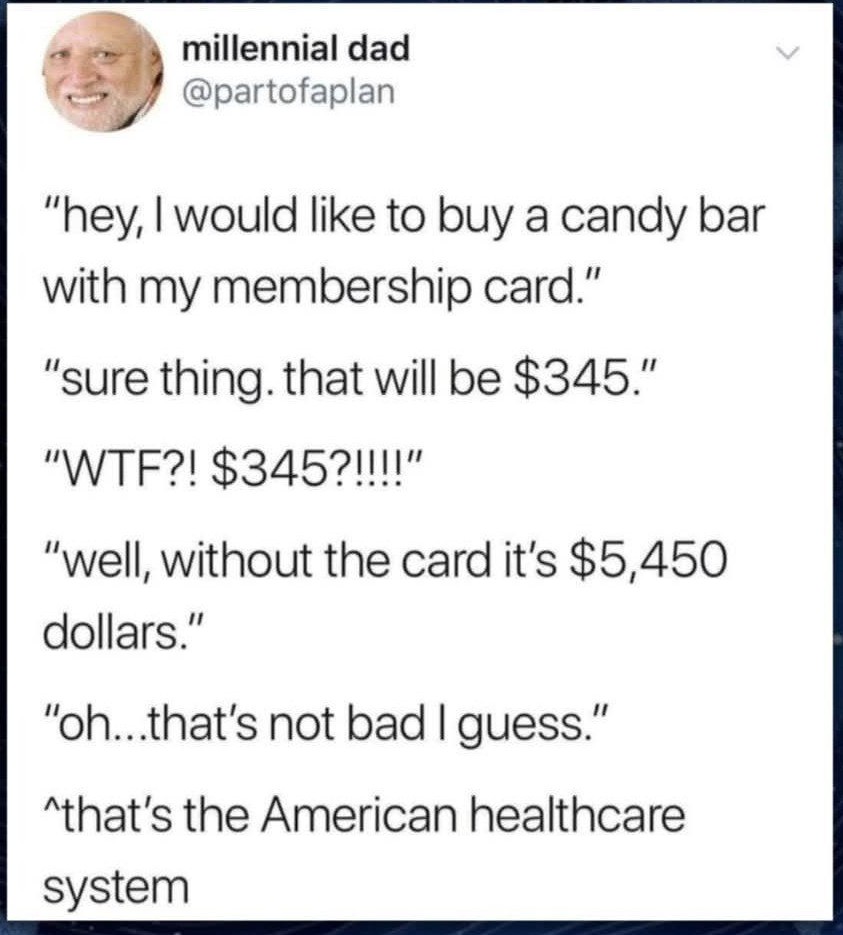
Doctors dont decide on costs of medications or procedures. Hospitals and Pharmacies do. When a doctor prescribes you a medication, their software only show the MSRP as a guide (and sometimes if your insurance covers the type, depending on the software). Pharmacies, when they order medication, only get to see the suppliers price and supplier availiblity. – The price you pay is based on the Pharmacies markup from cost, usually around 23-40%, to cover operational costs and profit margins of around 3-17%.
The really messed up part is that Pharmacies in the US, are locked in by contracts to choose thier suppliers. This lets suppliers charge what ever they want to Pharmacies, and create artificial shortages at any time with impunity. Pharmacies can change suppliers after the contract is up, but, the supply system is so corrupt, its a case of bottom-up corruption. To fix it you would have to re-regulate the system from manufacturer to hospital. Allowing pharmacies to buy direct, prohibit supplier contracts/rebates, and regulating the costs of medications with caps at each stage would solve all of this. However, none of that can ever be done, as long as politicians have a option to make profit from the system too. They dont pay for medication or treatments, you do. They have no incentives to fix the system and every incentive to make it worse, which is why we see just that.
However, the biggest contributor to the cost from the medications manufacturers, They reap the most rewards. Want a example? Insulin. The cheapest medication in existence to produce, no licensing, extremely plentiful and cheap ingredient costs and scales easily. Its literally a pure-profit medication and one that some people depend on (and they actively prevent cures from being researched via lobbying and paid counter-research). Remember, most pharmaceutical CEO’s are multi-millionaires. They are for-profit and they reap all of it you will tolerate without turning them into spaghetti.
As far as Doctor treatment costs. Doctors generally make very little, even private practice doctors, the “practice” is the same as a hospital, they rarely operate it themselves and they only get to dictate their rates. ofcourse the rates are negotiable and why insured patients generally pay less, than uninsured patients as they cant negotiate with the doctor directly, only the practice which will never budge unless you get a lawyer involved…
When you are at a hospital however, thats when things get reaallly messy. You have all of the above costs, plus the hospitals surcharges on each of those on top of it. In the US, Hospitals rarely receive much outside funding (and as of 2026, they are receiving the least amount in US history, since treatment regulations existed). They are required by law to treat anyone that walks in the door. Whether they have insurance or not. They eat 80% of the cost of treating most patients in the end, and thats before the hospitals Board gets paid. Remember, hospitals in the US are For-Profit. Who makes up the hospitals board? Retired doctors, Lawyers and Investors. Basically a bunch of old men, that dont have any costs of living…
So why is it so expensive? Every time a hospital needs to use a vial of Morphine for example, it has to be disposed of at the end of the day (Usually, depends on the hospital). The safety regulations on medicine and equipment make operation costs high, and profits low by design, So the cost per-patient goes up. So every time they have to eat the cost of some one without insurance in the US medical system, the debt goes up.
Most US Hospitals have more debt than nearly any other industry. It makes it VERY hard to get loans and even harder to maintain operation. Its why most rural hospitals close and most big city hospitals are insanely expensive. Its hard to keep up with the costs of operation, and debt repayments when you rarely make a profit and are constantly taking on debt to pay the board.
Remember, the bulk of a hospitals real operation cost is paying the board. While they may not make as much as you think, they make far more than they should and get even more through pharmacutical and medical instrument manufacturer kick-back deals. (Remember Prozac and Viagra… most of their marketing budget was spent on this… that is just one example in the last 20 years)
This is why countries with universal healthcare systems are generally doing better and its cheaper to operate. Germany and AU still have private + public systems, and while they are still as not as good as some European countries, the regulations on medication, and medical equipment prevent the free-for-all of price fixing like the US has.
The US has one of the worst medical system ratings in the world, remember that. The only things that used to get high ratings was the reconstructive surgery sector. That has even died off from corruption over the last 20 years.